
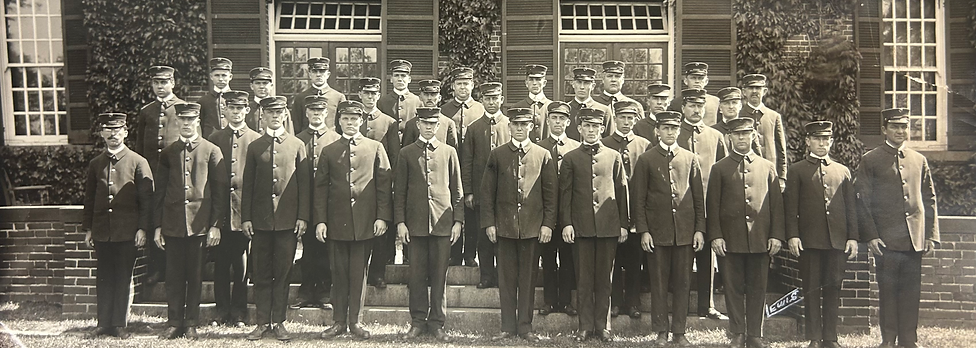
~ Men's Group Attendants in Uniform: 1916 ~
Men's Group History
When Springfield was established in 1896, the site consisted primarily of vast farmland and scattered remnants of the original farmstead. Due to severe overcrowding and neglect at Spring Grove State Hospital in Catonsville, the State of Maryland began transferring patients to the newly founded Springfield, then called “The Second Hospital for the Insane of Maryland.”
The first 22 male patients were housed in the Buttercup Cottage, located on the south side of the campus, while construction began on the hospital’s first major complex — the Men’s Group Quadrangle.
Design and Construction
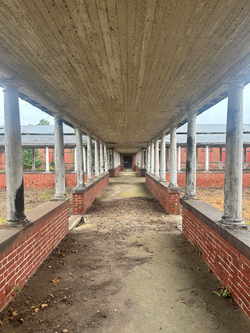
The Men’s Group was designed in a quadrangle layout, with each building connected by a covered corridor or walkway. The complex consisted of an Administration Building and three residential cottages (A, B, and C). This was the second implementation of the “Cottage Plan” design in the United States, following Medfield State Hospital in Massachusetts.
Although not the first example, Springfield’s adaptation was the most successful. The hospital operated under an “open-door policy” — its buildings had no barred windows or locked doors, and patients enjoyed full access to the grounds. This progressive approach earned Springfield national recognition as a “model institution.”
Administration Building
The first floor housed the hospital’s administrative functions, including offices, a reception area, sitting room, attendants’ dining hall, pharmacy, switchboard, and washrooms.
The second and third floors contained apartments and suites for staff, many of whom traveled long distances to work at the hospital.
In the basement, patients’ dining rooms and kitchens were located.
Patient Cottages (A, B, and C)
Each cottage functioned as an independent ward. The first floor featured a front reception room with stairwells, a washroom and lavatory, and a large day hall made up of three interconnected rooms furnished with tables, chairs, and ornate decorative details for patient leisure. Two single bedrooms on each end of the floor served patients unable to climb stairs.
The second floor contained a changing room, lavatory, washroom, and an attendant’s alcove at the center, leading into the main dormitory — a large, open sleeping area spanning the building’s length. Like the first floor, two single rooms were located at either end, with an additional door providing access to a fire escape stairwell.
Expansion and Later Years
After the construction of the Women's Group Quad, the Men’s Group continued to grow through the early 20th century, with new buildings added as follows:
-
Cottage D – 1904
-
Cottage E (Epileptic Ward) – 1905
-
New Dining Hall & Kitchen – 1908
-
Cottage G – 1911
-
Tuberculosis Cottage - 1915
-
Cottage F – 1927
-
Infirmary – 1929
-
Cottage K – 1932
Springfield would continue to construct several other complexes of buildings over the years (Hubner Building, Epileptic Group, etc.) The Men’s Group operated at full capacity until the 1970s, when institutional downsizing began. Cottage F was the first to close, and by 1985 the entire group had ceased operations.
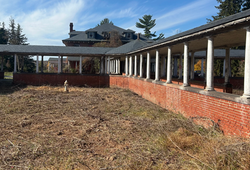
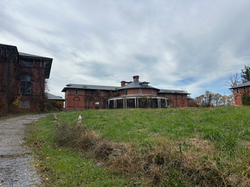
Exterior maintenance continued into the 2000s, but the buildings were gradually overtaken by vegetation. In September 2025, Springfield Hospital launched a large-scale cleanup and preservation project to restore and stabilize the Men’s Group Quadrangle.
See the preservation tab for more information on said cleanup
Men's Group:
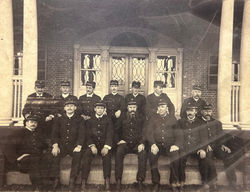
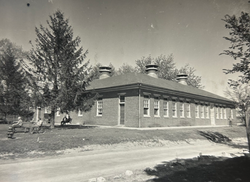
Historic Images
 |  |
|---|---|
 |  |
 |  |
 |  |
 |  |
 |  |
 |  |
 |  |
 |  |
 |  |
 |  |
 |  |
 |
Men's Group:
Modern Images
 |  |
|---|---|
 |  |
 |  |
 |  |
 |  |
 |  |
 |  |
 |  |