

~ John Hubner Psychopathic Building: 1913 ~
John Hubner Psychopathic Building History
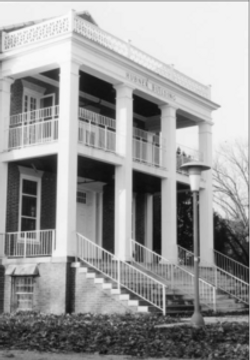
When construction began in 1912, the John Hubner Psychopathic Building represented a dramatic departure from every structure Springfield State Hospital had built up to that point. Completed and occupied in 1913, the Hubner Building became the first Psychopathic Hospital in the world—the first building at an asylum specifically designed to treat acute, potentially curable mental illness. Prior to its construction, Springfield operated strictly as a chronic-care institution, where long-term management rather than cure was the primary expectation. The psychopathic building was named after a man named John Hubner, a Maryland senator known as "the father of Springfield". Hubner was the man who pulled the legislation for the hospital in 1894. This however was before it was known where the hospital would be built, how it would be designed, operated, etc.
A New Direction for Maryland’s Mental Health System
The opening of the Hubner Building marked a new era not only for Springfield, but for the State of Maryland’s entire mental health system. It quickly earned a reputation as the institution’s “crowned jewel.” Before Hubner, male and female patients were processed separately—men were admitted through the Administration Building on the Men’s Group, while women were received at the Women’s Group nearly half a mile away. These two divisions functioned as near-independent hospitals with their own routines, staffs, and infrastructures.
The Hubner Building centralized the entire patient-receiving process. For the first time, both male and female patients entered the same admissions and diagnostic facility, breaking down the functional separation that had defined Springfield since its earliest years. Hubner also became the central receiving unit for nearly all of Maryland's state hospitals, with the exception of Crownsville, which remained separate due to the state's historical system of racial segregation. Because Hubner housed Maryland's only psychopathic hospital unit, all individuals admitted to the state hospital system for psychiatric evaluation were initially processed there. Patients were assessed and classified as either acutely or chronically mentally ill. Those deemed acute remained at Hubner for treatment, while those classified as chronic were typically transferred back to their regional state hospitals, such as Spring Grove or Eastern Shore. Patients assigned to Springfield, however, were placed within one of its specialized chronic-care groups.
Design and Structure
The building was constructed in the shape of a Geneva Cross, with four wings extending from a central octagon. Rising four stories tall, the building was designed with a level of medical sophistication and architectural ambition entirely new to the hospital.
-
Wings:
Each of the building’s wings included two stories and a basement, with the first and second floors of each wing functioning as independent wards. Every ward contained its own day halls, dormitories, lavatories, porches, and work or recreation spaces. -
North Wing (Main Entrance):
This was the only wing not designated for patient residence.-
First Floor: Administrative offices, reception rooms, clerical areas, staff dining rooms, and parlors.
-
Second Floor: Staff living quarters.
-
-
The Third Floor:
Only the central octagonal section rose to the full third story. This floor housed:-
The Laboratory
-
The Surgical Suite
-
The Anesthetic Room
-
The Surgeon's Apartment
-
Above this level stood the building’s most distinctive feature—the large, elegant cupola, visible from nearly anywhere on campus. More than ornamental, the cupola served as a ventilation system, releasing surgical gases and circulating fresh air throughout the upper floors.
-
Elevator:
The Hubner Building was one of the first at Springfield to be equipped with its own elevator, reflecting its modern medical intent.
The Basement: Light, Air, and Treatment
Hubner was constructed elevated high off the ground so that the building’s basement received abundant natural light through tall windows. This level was devoted entirely to advanced therapeutic modalities, including:
-
Hydrotherapy rooms
-
Massage and physiotherapy suites
-
X-ray rooms
-
Changing rooms
-
Dining facilities
-
Additional treatment and service rooms
A New Clinical Pathway
Once admitted, patients were assessed and then assigned to one of two paths:
-
Acute Patients:
These individuals remained in the Hubner Building for intensive treatment until recovery and discharge—or until physicians determined the illness was not curable. -
Chronic Patients:
Those deemed incurable were transferred to the traditional population:-
Epileptic Group (after its establishment in 1924)
This system positioned Hubner as the hospital’s administrative, diagnostic and therapeutic hub, while the older cottages continued to serve long-term care populations.
20th-Century Use and Modern Legacy
The Hubner Building remained actively used throughout the 20th century, had an addition built on to it in 1931 and even contained its own museum by 1996, commemorating the institution's unique place in psychiatric history.
In the early 2000s, the Town of Sykesville purchased both the Hubner and Women’s Group complexes, but soon after sold Hubner back to the State of Maryland. Following these transfers, the Hubner Building was fully converted into the Maryland State Police Central Training Facility.
Today, every Maryland state police officer receives training at Springfield because of the Hubner Building’s continued use.
Hubner:
Historic Images
 |  |
|---|---|
 |  |
 |  |
 |  |
 |  |
 |  |
Hubner:
Modern Images
 |  |
|---|---|
 |  |
 |